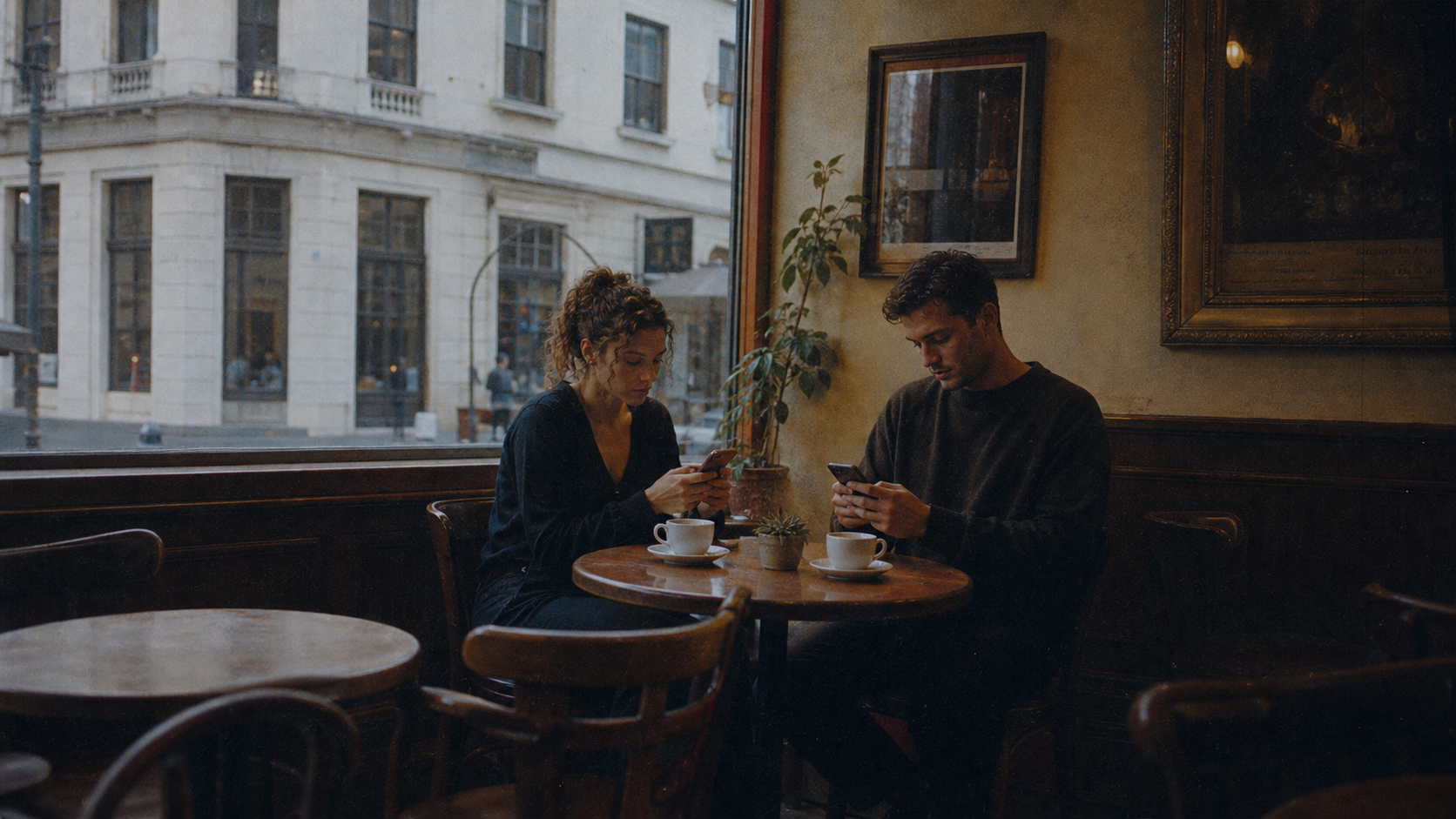
Bryan Johnson spends more on staying healthy than most people spend on their house. Blood panels, a rotating cast of doctors, and enough health data to fill a research lab. So when someone who measures almost everything decides to run a simple experiment on himself, it’s worth paying attention.
This time, the experiment wasn’t another supplement or longevity protocol. It was much simpler: quit social media for seven days.
No Instagram. No TikTok. No Snapchat. Just a week without the endless stream of feeds competing for his attention. He documented the experience and, by the end, described it as one of the biggest lifestyle changes he’d made.
Most of us aren’t about to disappear for an entire week. We still have jobs, families, and group chats that actually matter. But the most valuable lesson from Bryan’s experiment isn’t that everyone needs a week-long social media fast. It’s understanding what the fast revealed, and how to bring a piece of that into everyday life.
Bryan Johnson framed the experiment less like a digital detox and more like fasting.
His reasoning was simple. Moderation keeps you in the fight: if you're constantly deciding whether to check social media "just once," you're still spending energy on the temptation. Fasting works differently. You need enough time away from something to actually feel its absence.
He made two decisions upfront:
All social media was off limits.
Audiobooks and podcasts were still allowed.
So he kept his screens and kept working online. The one thing he removed was the constant pull of social media.
The first day felt strange. By the end of the week, he said he never wanted to return to social media in the same way again. He noticed his surroundings again, and his own thoughts and emotions with them. In his words, the week reminded him how blind he'd become to many of the essential things in life.
The strangest discovery was in his backyard. During the week he realized the artificial turf there was made from recycled tires and contained chemicals he didn't want around his family. He'd spent millions optimizing his health, and it had been sitting there unnoticed the whole time.
The fast created enough mental space for him to notice a problem that had been hiding in plain sight. That's a bigger idea than spending less time on your phone.
A reset creates awareness. Habits create change.
Bryan's experiment answered one question: what happens if you remove social media completely, for long enough to feel its effects?
Research asks a different one: what's the most sustainable way for most people to improve their relationship with their phone?
One of the strongest studies comes from Ruhr University Bochum. Researchers split 619 participants into three groups. One gave up their smartphone entirely for a week. Another cut daily use by just one hour. A control group changed nothing.
Both intervention groups improved. But four months later, the people who had simply trimmed an hour a day were still using their phones less, exercising more, reporting higher life satisfaction, and experiencing fewer symptoms of anxiety and depression. As lead author Julia Brailovskaia put it, you don't have to give up your smartphone completely to feel better.
The two results fit together. Bryan shows how powerful stepping away can be. The research shows what tends to last once everyday life returns.
Decide once, not at 11 p.m.
One lesson from Bryan's experiment transfers perfectly to everyday life: he removed the decision. There was no internal debate about whether to check Instagram for just a minute. He'd already decided.
Most attempts to reduce screen time fail on this exact point. Every choice happens in the moment we're most vulnerable: late at night, tired, bored, already holding the phone.
Behavioural psychologists call the alternative stimulus control. Make the decision ahead of time, while you're thinking clearly. Decide in the morning that social media disappears after 10 p.m. Decide before work that Instagram stays blocked until lunch. Move the decision away from the moment temptation arrives.
A version that fits a normal week
You don't need a seven-day fast to learn something useful.
Watch first
For the next two days, change nothing. Each evening, open your Screen Time report and write down the two moments that bothered you most.
Not the total hours. The moments.
The late-night scrolling that stole an hour of sleep. The commute that disappeared into reels instead of music or a podcast. The Saturday morning where you were physically present but mentally somewhere else.
Protect those moments
Rather than trying to change your entire day, protect the two moments where social media costs you the most. For many people that adds up to roughly an hour, almost exactly the amount that produced lasting improvements in the Bochum study.
Replace, don't remove
Bryan filled the space deliberately: podcasts, audiobooks, time outdoors. Aim for better space, not just empty time.
If you're reclaiming your evening, put a book on your nightstand before dinner. If you're reclaiming your commute, download the podcast before you leave the house. Make the better choice the easier one.
Where enough. fits
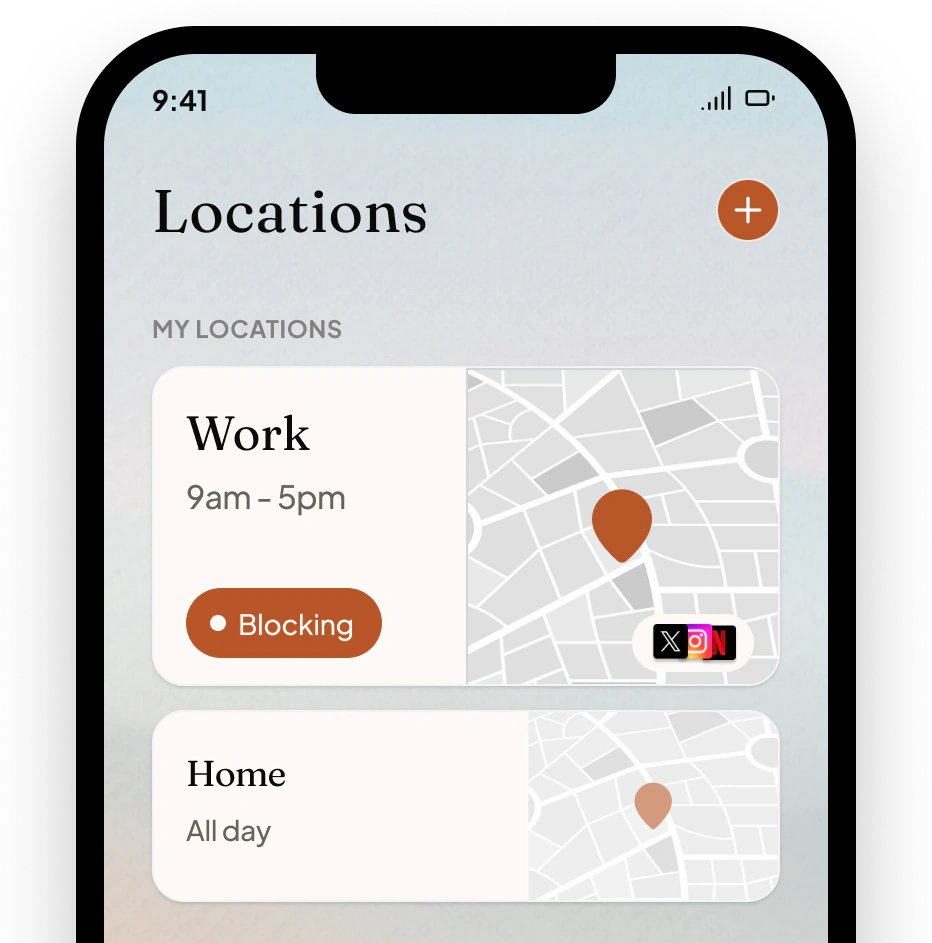
This is the problem enough. was built to solve. Instead of relying on willpower every night, you decide once. Choose the places and times where social media isn't welcome, and your phone holds the line for you. After 10 p.m., the apps disappear. Arrive at work, and they're already gone. No negotiations required.
The free plan is enough for this entire experiment: one schedule and one location. And if you'd rather use gentle friction than blocking, apps like one sec or ScreenZen are excellent too. The specific tool matters less than making the decision before you're tempted to break it.
The part to copy
Bryan Johnson's experiment makes one thing hard to unsee: attention is finite. A week away showed him what the scrolling had been costing him, right down to the turf in his own backyard.
You don't need to repeat the whole experiment to get the benefit. Protect one hour a day. Decide ahead of time. Give your attention somewhere better to go.
You may be surprised by what was sitting right in front of you all along.