
You've probably done the check. Settings, Screen Time, and then that small flinch at the daily average. The question that follows is usually some version of: is this normal? Is this bad? How much screen time is too much, actually?
The honest answer is that there's no single number, but there is a defensible one, and there's a better question hiding underneath it. This post covers both, minus the panic.
How much screen time is too much, according to the guidelines
For adults, the clearest published line comes from the Canadian 24-Hour Movement Guidelines, one of the few evidence-based frameworks that addresses adult screen use at all: no more than 3 hours of recreational screen time per day, inside a broader cap of 8 hours or less of total sedentary time.
Two words in that sentence do a lot of work. Recreational means the spreadsheet hours don't count against you; this is about the scrolling, streaming, and gaming hours you chose. And guideline means it's a line drawn through population-level evidence about sleep, mood, and physical health, not a cliff edge where hour four starts dissolving your brain.
How are we doing against it? Better than the panic headlines suggest, worse than we'd guess of ourselves. When Statistics Canada measured adults directly between 2022 and 2024, 57% met the three-hour recommendation, which leaves more than four in ten adults past it. The same survey clocked average sedentary time at 9.3 hours a day, past the guideline before the phone even enters the picture.
Why the total is a blunt measure
Researchers keep finding that the harm in screen time is less about the raw hours and more about what those hours displace and when they happen. An hour of video call with your family and an hour of 1am feed-scrolling weigh the same in your Screen Time report and very differently in your life. The report can't see the difference between a commute spent reading and a dinner spent half-present.
That's why chasing the average is a dead end. The average adult clocks far more than three recreational hours across phone, TV, and everything else, so "am I normal?" and "am I fine?" are different questions. Normal is not a health target.
The number that matters more: the next hour
The most practical finding in this literature isn't a ceiling at all. In 2022, researchers at Ruhr-Universität Bochum split 619 adults into three groups: one gave up their smartphone for a week, one cut use by a single hour a day, one changed nothing. The one-hour group came out best, and stayed best: four months later they were still using their phones 45 minutes less per day, with higher life satisfaction, more physical activity, and fewer symptoms of depression and anxiety.
Read that against the three-hour guideline and the message gets simple. Wherever you currently are, the evidence-backed move is to subtract one deliberate hour, rather than to chase some universal ceiling. The benefit came from the reduction itself, at every starting point the study measured.
A better self-check than the average
So instead of asking whether your daily total is too much, ask two smaller questions:
Which screen hour costs you the most? Not the biggest one, the most expensive one. For most people it's the late-evening scroll (it taxes sleep, and sleep taxes everything) or a moment when someone you love is in the room.
Would you take that hour back if it didn't require a nightly fight? Because that's the actual proposition. The Bochum participants didn't out-muscle their phones for four months; they made one structural change and let it run.
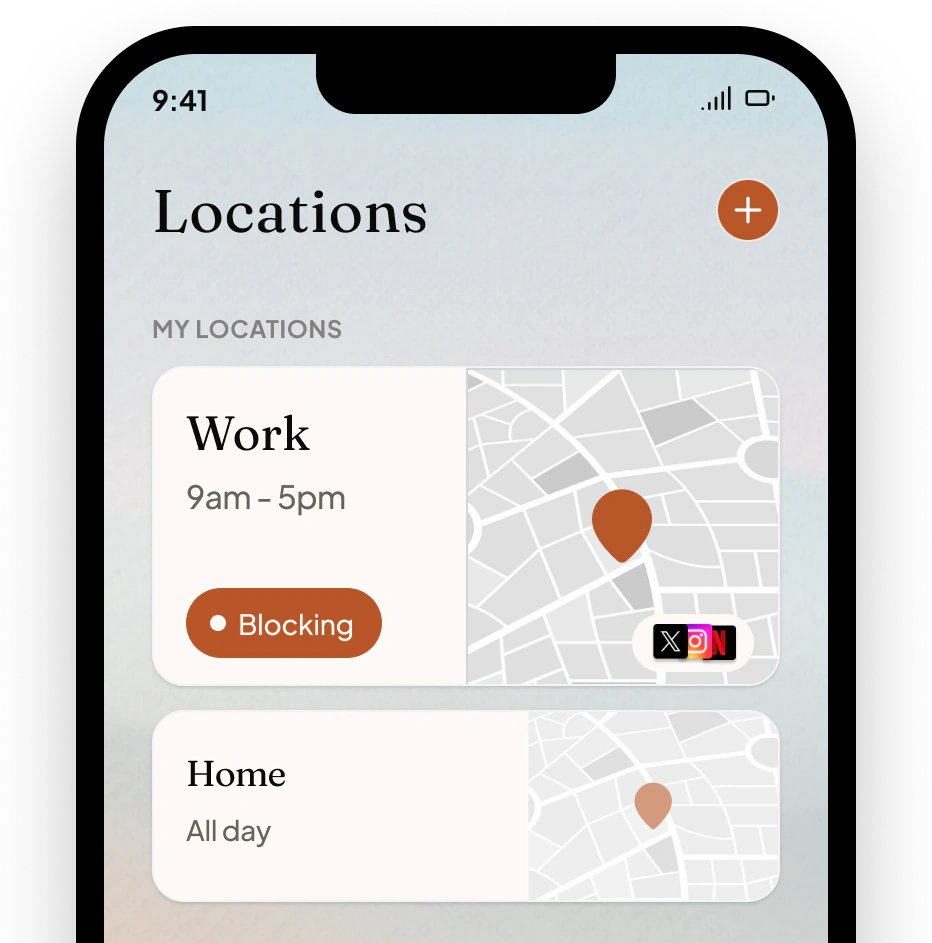
If the answer to the second question is yes, the mechanics are the easy part. We wrote a realistic one-week plan for exactly this, and if you want the decision to enforce itself, enough. will hide the apps you chose at the times and places you chose, so the hour comes back without being re-won every night.
The honest summary
Three hours of recreational screen time is the best available line for adults, and nearly half of us are past it. But the total is a blunt measure of a specific problem, and the research points somewhere more hopeful: you don't need to hit a magic number to feel the difference. One deliberate hour, placed where it hurts most, showed measurable effects that were still there four months later.
Too much is real. It's just not a number on a dashboard. It's whichever hour you'd want back.