
You sit down to study. Phone face down, on silent, next to your notes. You're disciplined about it. You don't pick it up. And an hour later you've read the same page three times.
A 2025 experiment on studying near your phone suggests it was costing you the whole time, even though it never buzzed.
What the study found
Researchers ran a within-subjects experiment with 162 undergraduate students, published in Behaviour and Information Technology. Each student did an online learning task twice: once with their smartphone present, once with it absent from the room. Using the same participants made the comparison more direct. It was the same person, learning the same way, with only the phone changing.
When the phone was gone, two things happened. Students felt less distracted, and they reported more flow, that state where you're absorbed in the work and time moves without effort. And flow was the piece that mattered for results. The students who reached flow learned better, and flow was easier to reach when the phone wasn't in the room.
The phones never rang, and nobody was texting. Their presence was enough to raise distraction.

Nomophobia, and who this hits hardest
The study also measured nomophobia, the low-grade unease of being without your phone. Students who scored higher on it were more distracted no matter what, but they gained the most when the phone was removed. Their learning improved significantly once it left the room.
That's the group most likely to say "I can't study without my phone near me." In the study, those students benefited most from putting it in another room.
One caveat: this was a single online task, not a semester of exams. It measures a moment of learning, not a final grade. But the effect it points to, presence alone draining attention, has shown up in other research too.
What to do with this
Change where the phone is instead of asking yourself to ignore it.
Put the phone in another room while you study. This study found that removing it worked better than leaving it face down on the desk.
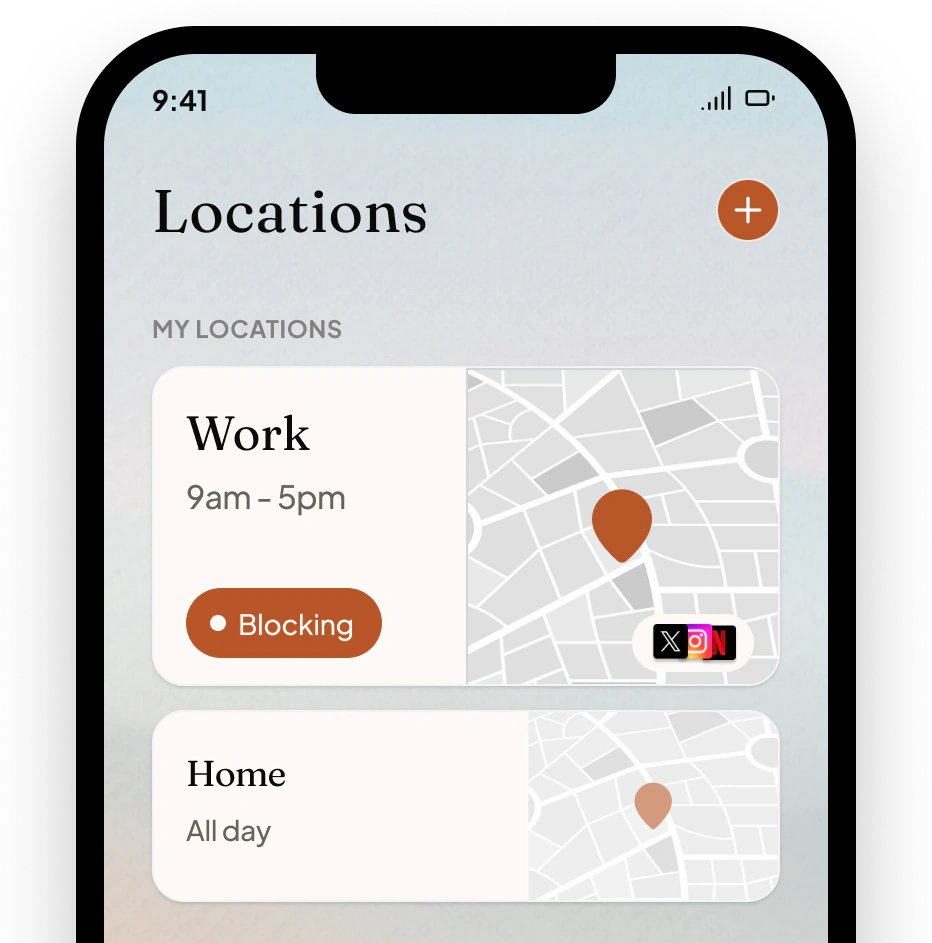
If it has to stay in the room for an alarm or a call you're waiting on, block the apps that derail you for the length of the session, so picking it up gets you nothing worth staying for.
Study in blocks with a clear end. Flow needs a stretch of uninterrupted time. Start with 45 minutes and keep the phone out of the room.
If leaving the phone in another room isn't practical, enough. lets you block the apps that pull you off task during set study times or at set places, so the phone can stay close for the things you need without staying open for the things you don't. We wrote more on that in our guide to focus apps for studying.
A phone can cost you attention without buzzing. Move it, and the page is easier to stay with.