In 2025, a team of researchers asked 467 adults to do something that sounds drastic and turned out not to be: blocking mobile internet entirely. For two weeks, they cut all mobile data on their phones. No feeds, no browser, no apps that need data. Calls and texts still worked. The internet still worked on their laptops. Only mobile internet stopped working.
The results, published in PNAS Nexus, matter because they push back on the idea that the only way to fix your attention is to quit your phone entirely.
What they measured, and what changed
The study tracked three things: sustained attention, mental health, and day-to-day wellbeing. People took an objective attention test, not just a survey about how they felt.
Across all three measures, 90.7% of participants improved on at least one. On the sustained attention test, the average improvement was about the size of reversing ten years of age-related decline. Mental health improved by an amount the authors note was larger than the average effect of antidepressants in clinical trials. Wellbeing rose too.
Screen time dropped from 314 minutes a day to 161. What filled the gap matters more. People spent more time with other people, more time exercising, more time outside, and they slept more. Removing the connection made room for things the phone had been crowding out.
Why blocking mobile internet, not the whole phone
The design here matters. The researchers didn't take anyone's phone away. Participants kept their contacts, their maps at home on wifi, their camera, their alarm. What they lost was the constant, on-tap connection to the feed.
Most people are stuck in the small, endless pull of something new to check, available in any spare three seconds. Cut the data to the apps that run on it, and the pull has nowhere to go.
One caveat: this was a two-week intervention, and not everyone stuck with it perfectly. Of the people who started, a smaller group completed all the check-ins. But the direction was clear and consistent, and the attention test in particular is hard to fake.
What this means if you're not going to install a full block
Most people reading this won't cut all mobile data for two weeks. You don't have to, and the study still points at something you can use.
The study reduced the number of times a day the feed could pull people in. Fewer pulls left more room for attention. The practical version is to make the feeds unavailable for stretches of your day instead of resisting them in the moment.
A few ways to do that:
Pick the two or three apps that eat your attention and block them during work hours. The study removed the pull without taking away the whole phone.
Keep the useful stuff: maps, messages, music, and the camera. You can remove the feeds without making the rest of the phone worse.
Give it more than a day. The attention gains in the study built over two weeks, as people's time filled with other things.
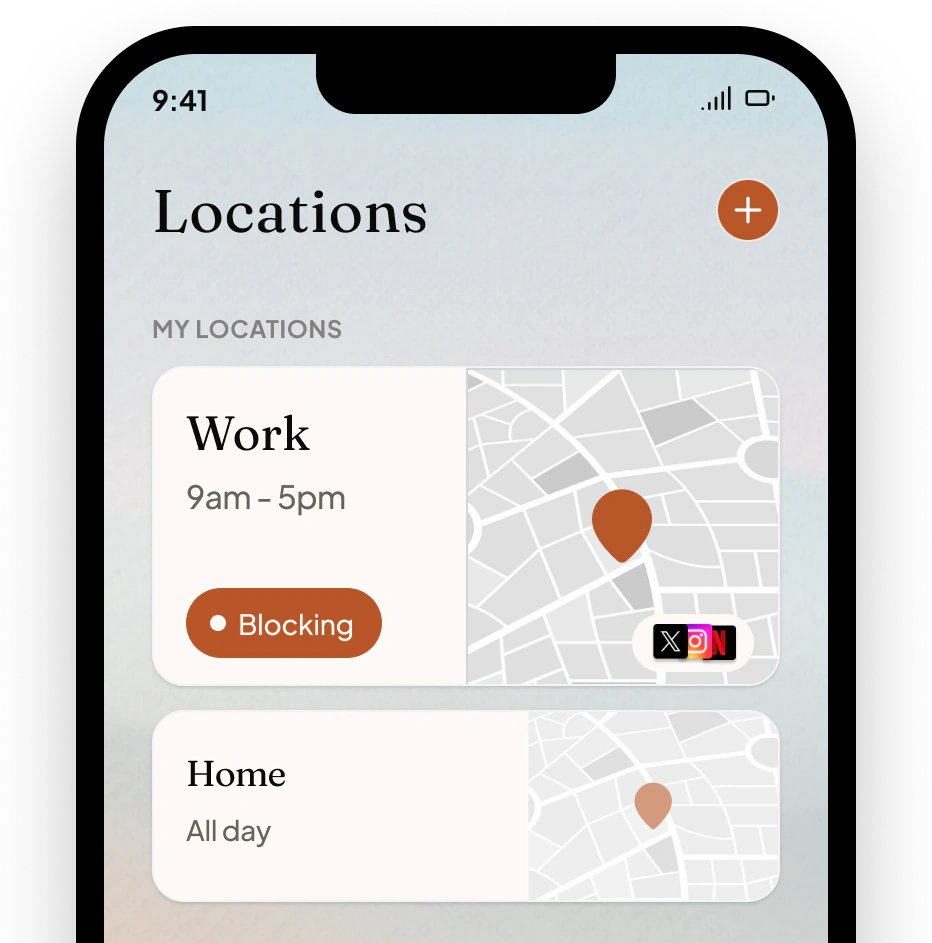
If you want to make that choice in advance, that's the idea behind enough.. You choose the apps, times, and places on a clear day, and the feeds aren't there to open when the reflex arrives. Calls and texts stay. Only the part that pulls you off track goes.
The research offers a practical reason for hope. Your attention has been learning a pattern hundreds of times a day. Take that pattern away for a couple of weeks, and it starts to learn a different one.